

When a project changes, can AI help the assessment team see what needs another look?
In my first article for Envigo, I argued that structuring assessment data would allow a consultancy to draw on experience accumulated across projects. It would also lay the groundwork for using artificial intelligence in impact assessment. Yet this raised a practical question. Where would consultants, already busy delivering studies, find the time to change how they worked? Generative AI gives us a reason to return to that question. How much of the work of organising an assessment could AI now help practitioners do? [1]
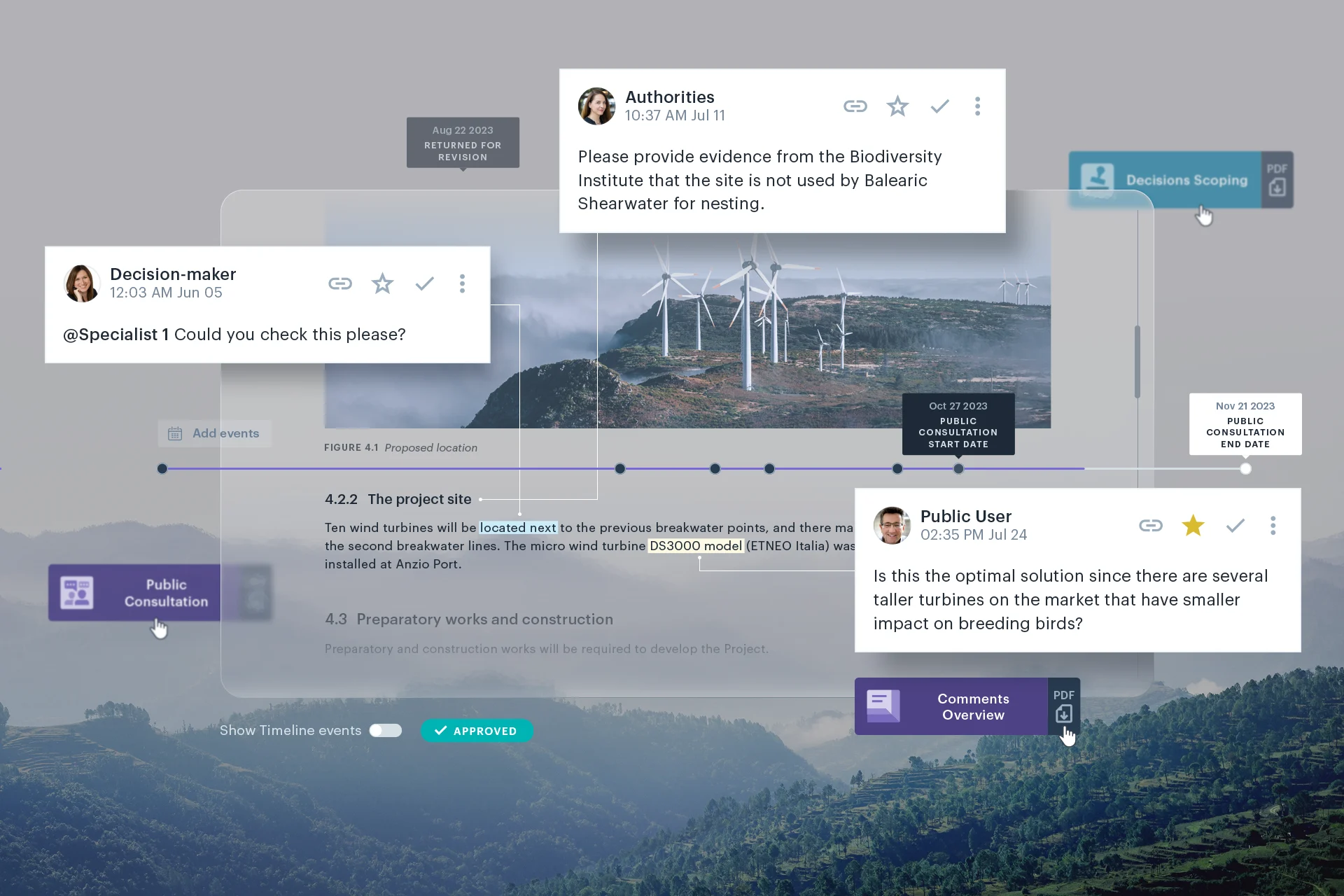
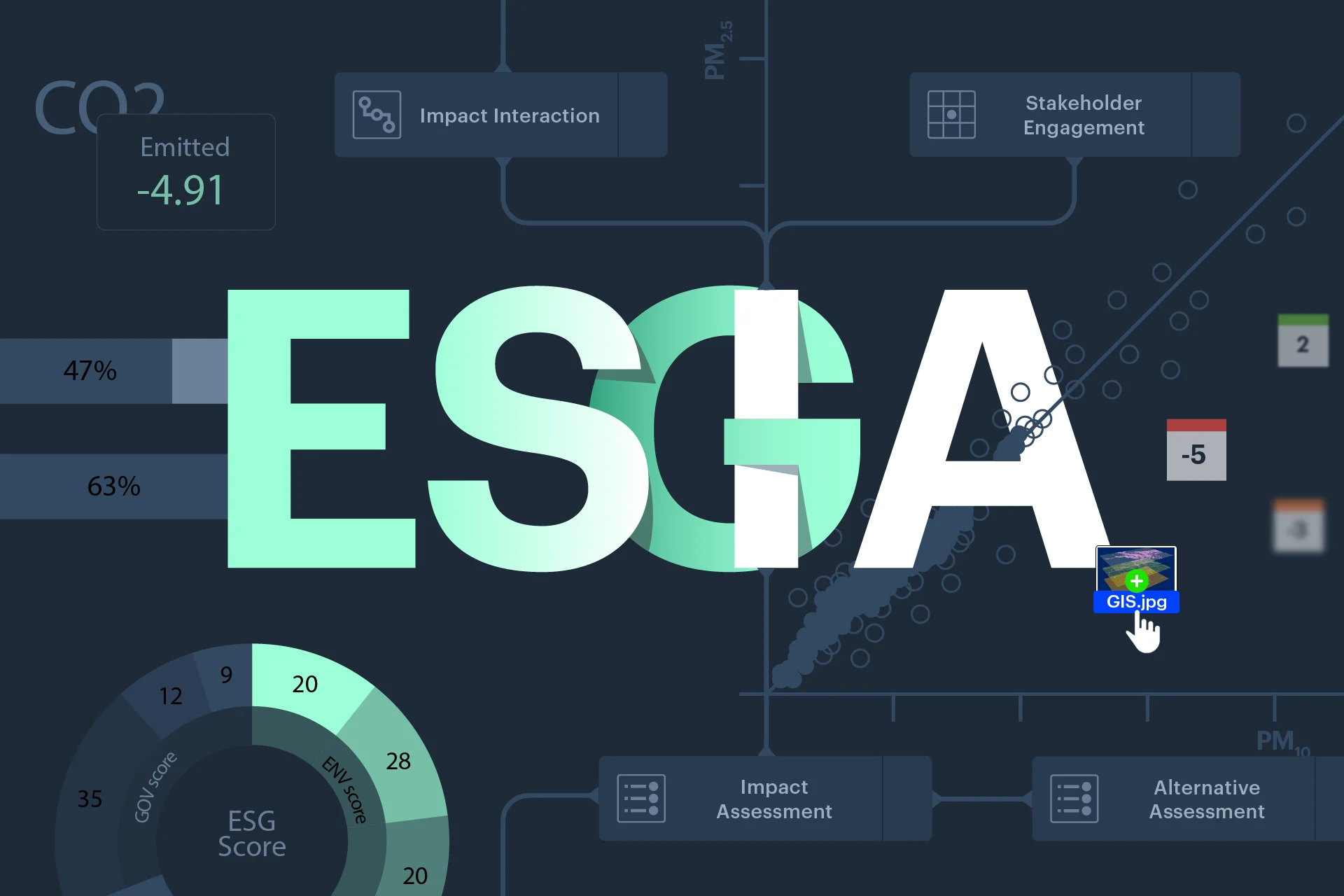
In the earlier Envigo, we could trace an impact from the project activity that caused it, through the pathway by which it reached a receptor, to its significance and the proposed mitigation. We could adapt the assessment and keep successive versions. I discussed this approach to structuring assessment data at IAIA25 and in the subsequent IAIA webinar. [2]

Carrying a design change through those steps, however, took considerable effort. The supporting documents and GIS maps were held elsewhere. A colleague could see how an impact had been assessed and still have to ask another team member for the evidence behind it.
Teams exchanging Word reports, Excel matrices and maps between specialists face much the same difficulty. What changes when each specialist also has access to a large language model (LLM)?
The developer revises the road. Who revisits the assessment?
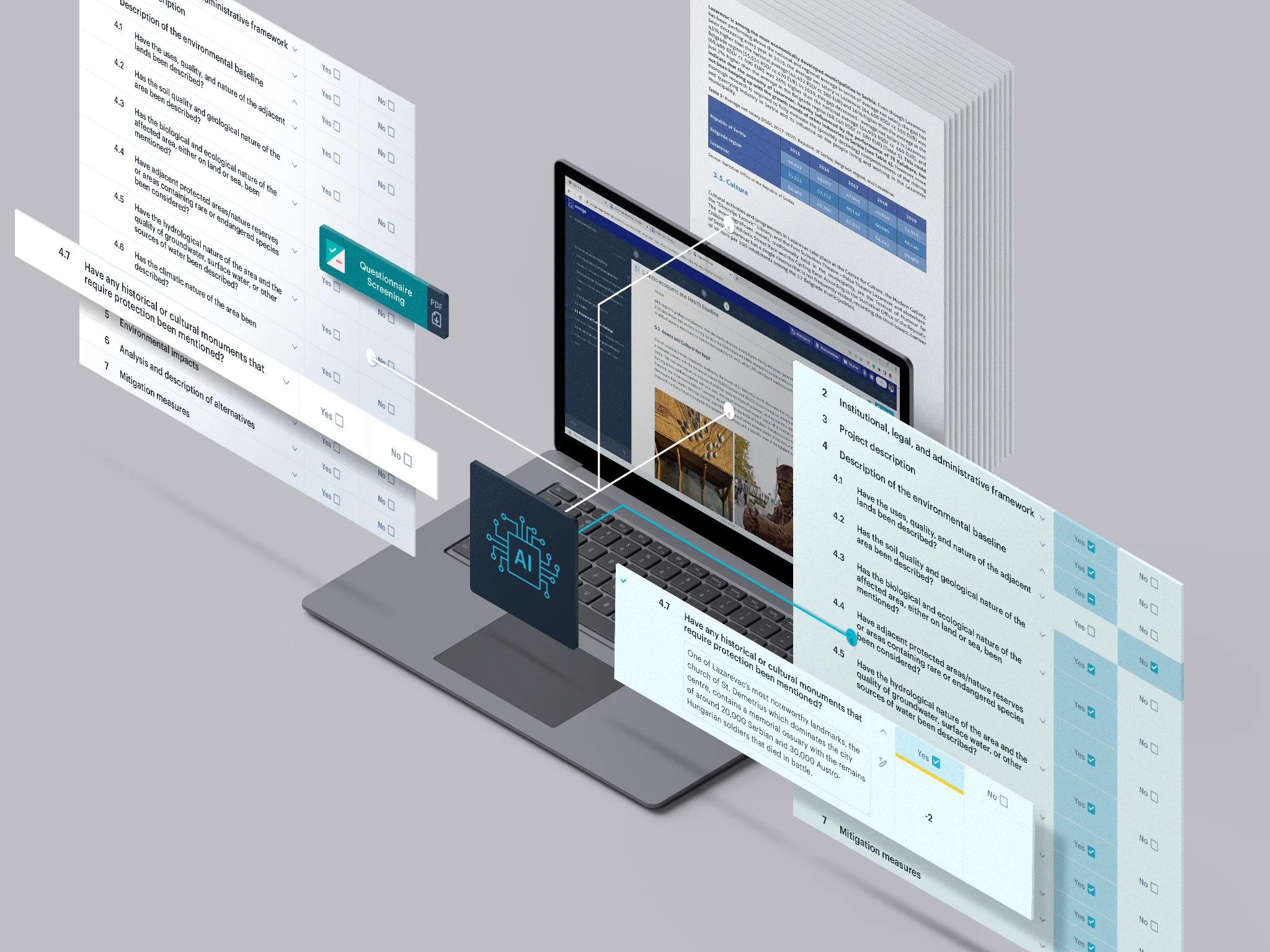
LLMs can help practitioners extract information from specialist studies, compare findings and explain technical material to the people affected by a project. [3] Consider a wind farm where the proposed construction route passes a school. At a public meeting, a parent asks whether lorries could avoid the start of the school day. The developer agrees to consider restricting deliveries. A general-purpose LLM can help the consultation specialist find the exchange in the minutes and recover the exact wording. The word consider matters to anyone preparing a response to the parent.
A week later, the developer’s design team sends the transport specialist a revised route drawing. The consultation specialist’s summary accurately describes the discussion about the original route. The transport specialist’s update accurately describes the new route. Read separately, each account makes sense. Read together, they leave the assessment lead with a question. Will the lorries still pass the school?
The assessment lead could compare the minutes with the revised drawing. On a small assignment that may be sufficient. On a large project, a single design change can affect the work of several specialists, leaving the lead to trace its consequences across their contributions. Here the revised drawing brings the lorries in from the other end of the village, but the final stretch past the school is common to both routes. The lead can establish that by checking the map. The parent’s observation supplies the detail the map cannot show on its own. The risk depends on the time children arrive.
In a shared assessment, the consultation specialist can record the parent’s comment once and link it to construction traffic near the school. When the route changes, both specialists can see the original concern. AI working with the same record could draw the lead’s attention to the earlier proposal and its source in the minutes. Suppose the developer then agrees with the school to restrict deliveries during the morning arrival period. The team can record the agreed hours and affected road segment against the impact and mitigation measure. The colleague preparing the monitoring plan now knows which deliveries to check, and the consultation specialist can tell the parent what was agreed.

When the evidence is missing
Consider a different task during scoping. A project proposes to discharge treated water into a stream. A specialized AI could organise the available measurements by sampling point and date, flag that they cover only the wet season and suggest adding the gap to the baseline study plan, directly connecting facts and responsible team members. The assessment lead can record the uncertainty about low-flow conditions against the discharge impact. The water specialist can then plan the sampling and review the results before the team assigns a significance rating. [3]
How does a change reach the report?
Return to the school for a moment. The consultation chapter should preserve what the developer said at the meeting. The mitigation measure and the monitoring plan should reflect the commitment made later. If all three are drafted separately, a reviewer has to reconstruct that sequence to decide whether their different wording is justified.
A structured assessment also changes how the team prepares the report. The impact pathway, significance rating and its justification, agreed measure and monitoring action can be assembled from the corresponding entries in the study. AI can draw on those entries and their supporting evidence to draft an explanation of why the team retained the delivery restriction after the route changed. If the agreed hours change again, the team has a specific measure to update and identifiable report sections to revisit. The original meeting record still serves its purpose. It explains how the issue came to the team’s attention.
What would make this worthwhile for an assessment practice?
For a specialist, a general-purpose LLM can already be useful for a well-defined task or exploration. The wider opportunity comes when several people need to act on the same finding. AI in a structured and ESIA tailor-made system can help them connect the evidence to the impact under review, carry an unresolved question into the work plan and identify which parts of the report a decision affects. With the earlier Envigo, making and maintaining those connections demanded considerable effort from the team. I see particular value in AI helping with that work while the specialist still has the evidence to hand, and professional judgment to make.
A practice director leading several teams has a further decision to make. When two projects need the same senior specialist, which one needs their attention first? One team may have enough evidence to complete its own revision. The other may need specialist advice before a survey window closes. If each lead can show in a shared system what has changed, what the evidence supports and which question remains open, the director has a sounder basis for assigning that specialist’s time. The same record can help a colleague take over a project without having to reconstruct the reasoning from earlier drafts.
So, can AI improve an impact assessment? I believe it can particularly when it helps a team recognise what needs another look while there is still time to influence the project. Whether it also reduces the total expert effort will depend on the work involved in checking suggestions and correcting omissions. I would be interested to hear from colleagues who have used AI on a live assessment. Did it change what your team investigated or what the project ultimately committed to do?
References
- Nikola Nikačević. Digital Impact Assessment — “mission impossible” or the “fifth element” of future sustainability. Envigo.
- Nikola Nikačević. Importance of data structuring and software modularization for digital IA. Presentation in Digital IA: Exploring Different Ways Data is Enhancing IA Practice, IAIA webinar, 16 September 2025.
- Ana Popović, Nikola Nikačević and Srđan Sušić. Environmental and Social Impact Assessment for Sustainable Development [Procena uticaja na životnu sredinu i društvo u funkciji održivog razvoja]. Akademija strukovnih studija Politehnika, Belgrade, 2025. Section 4.10 on AI in assessment and section 5.1 on missing and unreliable information.